
bo.yu@sykainai.com
+86-18640398938
Magnetic pump - Magnochem
Time:2026-05-08 Source:Shenyang Kainai Technology Co., Ltd. Editor:Shenyang Kainai Technology Co., Ltd.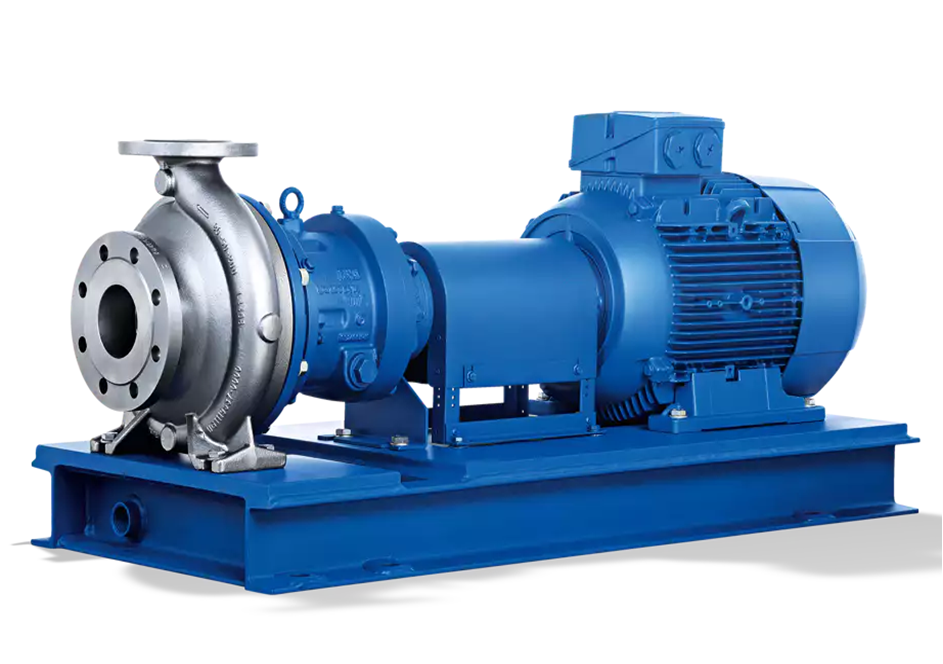
Description
Horizontal shaftless volute pump, back suction design, with magnetic coupling, compliant with DIN EN ISO 2858/ISO 5199 standard, with radial impeller, single suction, single stage.
Application
chemical industry
Regional heating
Industrial cycle system
air conditioning equipment
Condensate transportation
Cooling circuit
petrochemical industries
Pipelines and oil storage tanks
refining equipment
Process Technology
Hot water heating system
Sugar industry
Heat carrier/hot oil equipment
industrial technology
Parameter
Maximum flow rate: 1400 m3/h
Maximum head: 236 meters
Maximum operating pressure: 40 bar
Maximum allowable medium temperature: 350 ° C
Advantage
High operational reliability:
1. Only static sealing/2, optional leak prevention device/3, protective shield cover through start-up installation devices on the outer and inner rotors/4, shield cover self emptying/5, no need to empty the pump when installing/disassembling the drive unit
Wide range of uses
1. Silicon carbide sliding bearings lubricated by conveying medium (optional with DLC coating)/2. Modular design principle for hydraulic system and magnetic coupling/3. Multiple operating modes to choose from/4. Temperature control and heating for pump casing and pump cover
Low maintenance cost:
1. Silicon carbide sliding bearings lubricated by conveying medium (no wear)/2, rolling bearings with lifelong lubrication (can work for 30000 hours when operating temperature is below 80 ° C) or rolling bearings lubricated with lubricating oil (35000 hours)/3, very suitable for high medium temperature:/4, insulation device can achieve very low surface temperature/5, heat sink can reduce rolling bearing temperature/6, optional fan impeller can extend temperature range to 400 ° C
Special measures can be taken to use within the range of ATEX temperature levels lower than the medium temperature
Ensure high safety through optional series connection of additional secondary and tertiary seals
Targeted leakage discharge between barriers can be achieved through optional interfaces